


Jorge Luis Borges in his short essay “Kafka and his Precursors” makes the point that as he came to read more of Kafka, he could ‘recognise his voice, or his practices, in texts from diverse literatures and periods’. Borges lists Zeno, Han Yu, Kierkegaard, Browning Léon Bloy, and Lord Dunsany. It is a complex point that Borges makes: All the examples resemble Kafka but do not resemble each other! ‘In each of these texts we find Kafka’s idiosyncrasy to a greater or lesser degree, but if Kafka had never written a line, we would not perceive this quality; in other words it would not exist’. Borges concludes ‘The fact is every writer creates his own precursors. His work modifies our conception of the past, as it will modify the future’. Borges is not making the point that these writers have influenced Kafka but rather that Kafka influences how we read the past and will influence how we read the future.

I have always found this brief essay intriguing as it raises that extraordinary point of how we come to frame the past, how arbitrary the lens that lends clarity to the outlines of the past and the shape of the future.
Chekhov’s “The Lady with the Little Dog” was first published in 1899. It is a story about Dmitry Gurov and Anna Sergeyevna and it is set in Yalta. I suppose we could say that it is a seaside holiday romance. Dmitri Gurov, notices Anna Sergeyevna, who is also vacationing alone with her dog. Intrigued by her beauty and apparent loneliness, he approaches her, and they start spending time together. Despite Gurov’s cynical attitude towards women, he finds himself genuinely attracted to Anna. But Gurov is serially unfaithful and perhaps even predatory, so we do not foresee that he will suddenly find himself entangled in this particular relationship. Nonetheless, after returning to Moscow, Gurov expects to forget about Anna, as he has with other past affairs. But he finds himself unable to stop thinking about her. His daily life feels empty and unfulfilling without her presence. Gurov travels to Anna’s town under the pretence of a business trip. He visits the local theatre, where he sees Anna. They secretly meet, and Anna confesses that she, too, has been unable to forget him. They resume their affair, realizing their deep feelings for each other. It is a story of the unpredictability of the possible outcome of an affair.
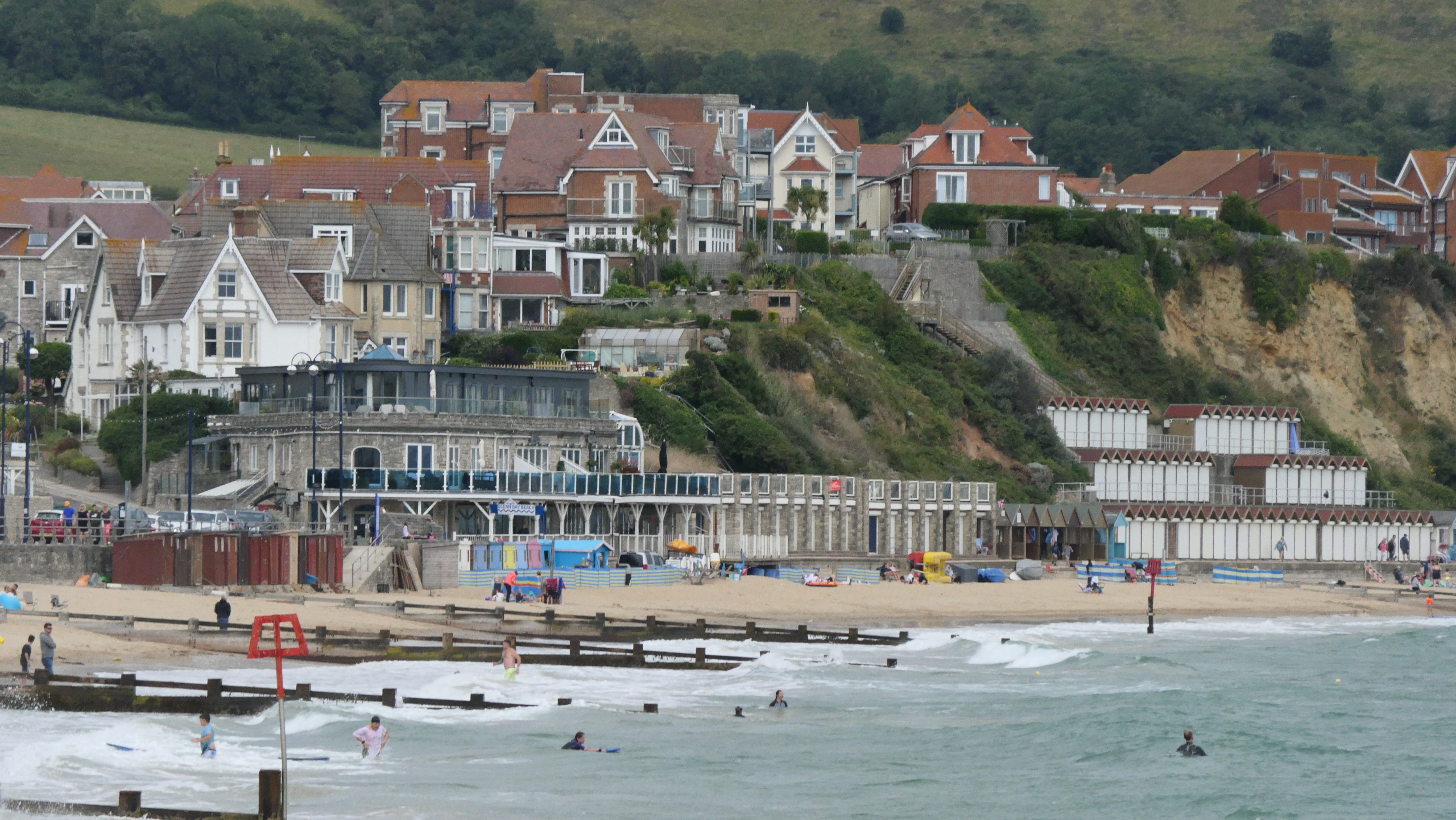
Now I never thought that I would find another story that deals with the same issues: a seaside holiday, a deliberate desire for a romantic and sexual encounter, and an unexpected outcome. This time the story is set in the Caribbean, out of season, in a cheap hotel, hence the title Cheap in August. Our protagonist is Mary Wilson who is married to an academic, presently in Europe working on a book on James Thomson’s The Seasons.
Mary Wilson is living a lie. She has pretended to her husband, that she has joined a friend, Margaret, on holiday in the Caribbean, precisely in Jamaica, but her wish is to betray her husband, ‘like so many of her friends ‘, by having a holiday affair. The trouble was that ‘after 3 weeks of calypsos, humid evenings, rum punches, the warm martinis, the interminable red snappers, and tomatoes with everything’, she had yet to succeed in having an affair.

So, what was the driver for her wish to have an affair. She concluded that the answer could only be the unfamiliar. Her female friends had confided that their affairs had usually been in Europe and were momentarily exciting and ‘then with what a sigh of relief they had found themselves safely at home’. In this story the only available man was Henry Hickslaughter: ‘She looked down at a polished mahogany crown surrounded by white hair; perhaps he resembled Neptune more than an elephant. Neptune was always outsize, and as he pulled himself a little out of the water to speak, she could see the rolls of fat folding over the blue bathing-slip, with tough hair lying like weeds along the ditches’.

So, this is not exactly the reverse of Chekhov’s “The Lady with the Small Dog”. For one, it is a woman seeking a holiday romance. She is inexperienced in the art of it and her target is not handsome or desirable. But will he do? She ends up in his bed, this obese man who was seventy and her father’s age. He was like a dead man in his immobility and his silence. She fell asleep lying next to him and when she woke, ‘he was lying away from her so that their bodies wouldn’t touch. She put out her hand and felt no repulsion at all at his excitement. It was as though she had spent many nights beside him in the one bed, and when he made love to her, silently and abruptly in the darkness, she gave a sigh of satisfaction. There was no guilt…’.

Borges is right about Kafka and his precursors. It is impossible to read Chekhov’s story now without thinking of Greene’s mirrored story. Both with their unexpected outcomes. Both speaking to loneliness and the impulse to connect to other people. Both also indicating how even a brief affair can have far-reaching consequences, sometimes disruptive and when not apparently so, coursing like an underground river in a cavern.

Photos by Jan Oyebode

 MindReadings