

I’ve just come back from Bucharest and it put me in mind of Cioran. He was born born Emil Cioran in 1911, in a small Transylvanian village, Rasinari. He moved to Paris in 1937 and died there in 1995. He was a Romanian philosopher and essayist who was known for his pessimistic and nihilistic perspectives. He was profoundly sceptical of the nature of human existence and the nature of life. His writings often explored themes of despair, absurdity, and the futility of existence.

I suppose that his philosophical worldview could be summarized as a reflection on the human condition, emphasizing the inevitability of suffering and the absence of inherent meaning or purpose in life. Cioran delved into various topics, such as the nature of time, the role of religion, the absurdity of hope, and the burdens of consciousness.

I like his writing style because of its poetic language and aphoristic structure. He expressed his ideas through profound and often contradictory statements. Of course, I am aware that some readers are drawn to his provocative exploration of existential questions, whilst others find his pessimism and nihilism disheartening.

Cioran’s proposition is that life is an enigma, a source of both fascination and despair. His writings offer a unique perspective on the nature of human experience, challenging conventional notions of meaning and purpose while prompting readers to confront the complexities of existence.

In an essay ‘Total Dissatisfaction’, he wrote,
Why this curse on some of us who can never feel at ease anywhere, neither in the sun nor out of it, neither with men nor without them?
I was tempted to put this remark down to the fact that Cioran was an exile from Romania and that like all exiles he found that he had not only lost his bearing, that he was adrift, unmoored from his natural habitat. And that even worse, his natural habitat, his homeland was lost to him. To be in exile was as much to be at sea and truly without a home. Cioran, however, is referring to something more fundamental, something that is bleaker and that is an affliction of being human and conscious.

For Cioran, consciousness, that light that shines on the world, raising objects in the world from mere background to a shimmering lustrous foreground, that at once is informative of our alienation from the world we inhabit and at the same time deepens the ruction from the natural, organic world. The apprehension of our mortality, our dependence on the primordial and instinctive, desire for food, lust for sex, the animal requirements that link us straight back to the other animals.

Cioran says of these
I’m weary of being a man. If I could, I would renounce my condition on the spot, but what would I become then, an animal?
This estrangement, as Cioran well knows, leads to deep loneliness, a breach in the communion with other human beings. Cioran is always surprising, always profoundly original in his analysis of what it is that irks us, what ails us, what it is that is the affliction that within eats away at the heart of our solace and is irremediable.
In his essay, ‘Melancholy’, Cioran writes,
The sensation of expansion toward nothingness present in melancholy has its roots in a weariness characteristic of all negative states. This weariness separates man from the world. Life’s intense rhythm, its organic inner pulse, weakens. Weariness is the first organic determinant of knowledge. Because it creates the necessary conditions for man’s differentiation from the world, weariness leads one to the perspective which places the world in front of man […] Melancholy therefore springs from a region where life is uncertain and problematic. Its origin explains its fertility for knowledge and its sterility for life.

The question, though, is how far Cioran’s notion of melancholy coincides with what one sees in the clinic. In the clinic, principally, it is mood that is pervasively altered. It becomes dominated by darkness and insipidity. Thinking follows suit; everything tends towards the morbid and the negative. The possibility of light and perspective is denied. In this state, there is no fertility for knowledge, only a shabby shallowness, a threadbare world of blanched colours and withered grubby outlines remains. Cioran is correct insofar as he points to the sterility for life. What might also be termed an impoverishment that pervades inner life, reflected in both poverty of speech and diminished, if not, sterility of gestures.
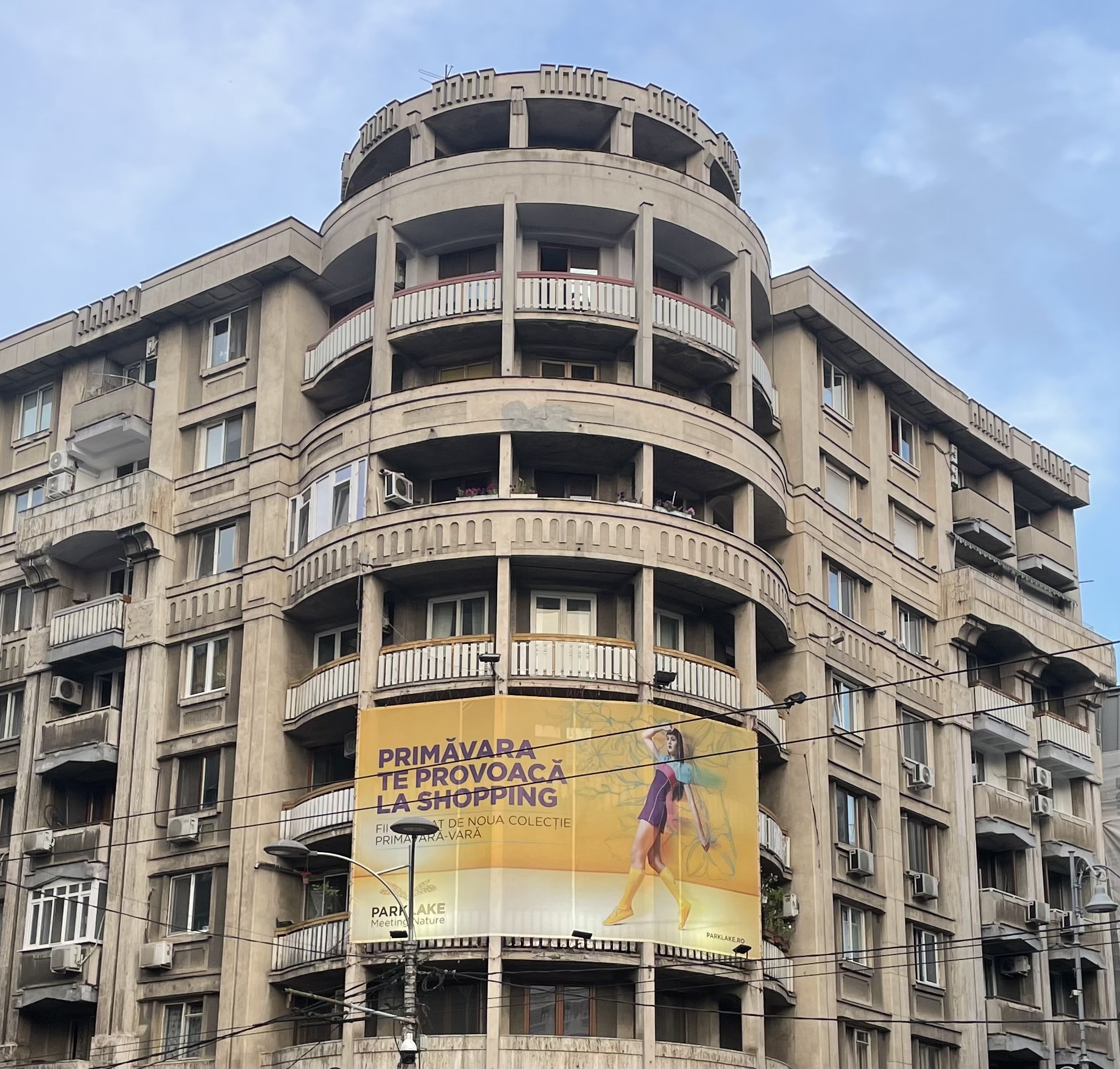
In my next visit to Romania, I will be going north, away from Bucharest to the Carpathian Mountains, to Dracula’s lair. It may be that here I might come to see what it is that leaked into Cioran’s spirit, what dye, toxic and mordant, steeped and staunched, made his morbidity, his melancholy so infectious.
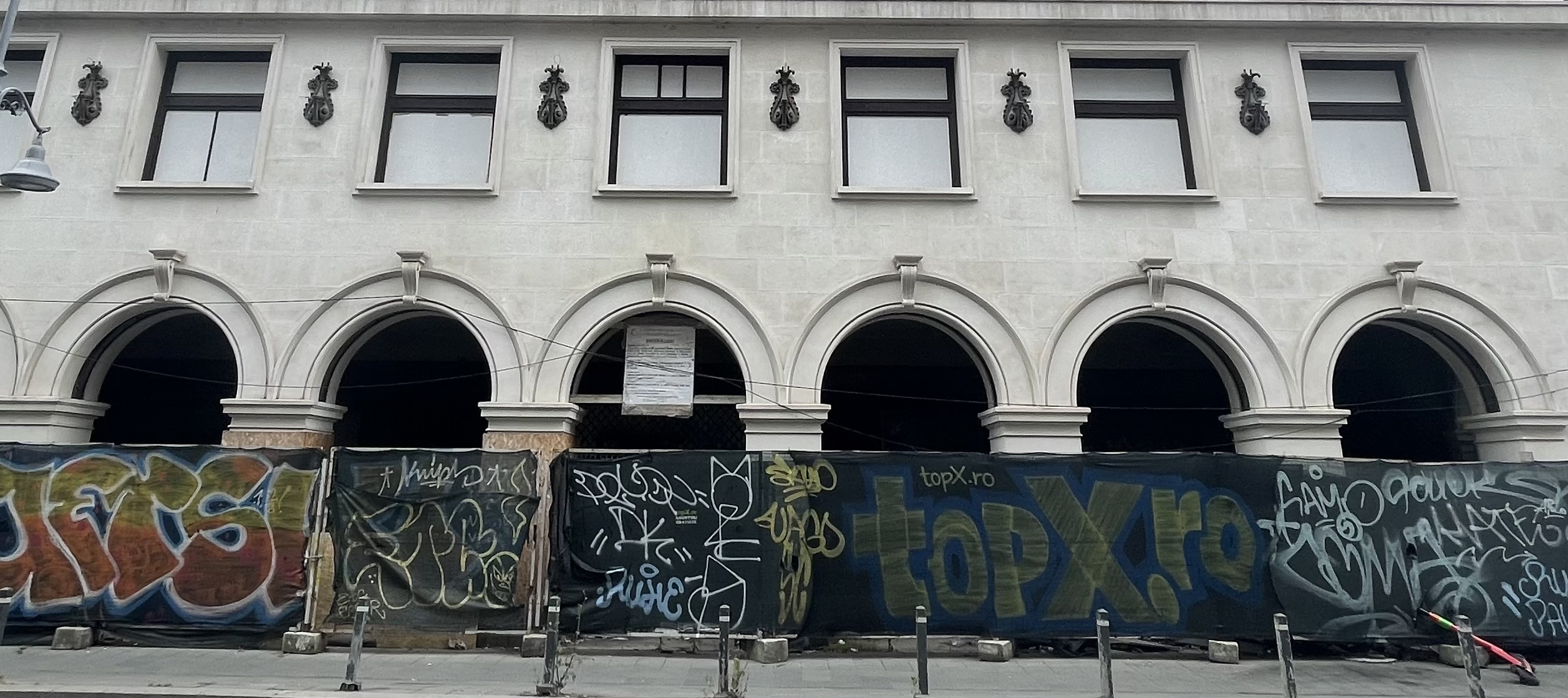
Photos by Jan Oyebode

 MindReadings
I love your description of consciousness, a perspective I have never thought of or seen elsewhere. At least he had the energy to write despite his sense of pervasive bleakness.
Thank you as ever Carolyn. Cioran is interesting for his melancholy as for his unexpected and concealed zest for life.
Femi